

What Does Companion Doll Mean: Your 2026 Guide
What Does Companion Doll Mean: Your 2026 Guide
A companion doll is defined as a physical or AI-enabled object crafted to provide emotional support, intimacy, and a stable, non-judgmental presence for individuals experiencing loneliness or seeking comfort. The term "companion doll" covers a wide range, from lifelike silicone figures to AI-powered interactive models that remember conversations and adapt to your personality. Research shows that elderly users reported a 23% reduction in depression symptoms and a 31% increase in overall life satisfaction when using companion dolls. Those numbers signal something significant: the emotional need these objects address is real, measurable, and growing. Youqdoll builds on this understanding by offering fully customizable, lifelike silicone companions designed to meet personal emotional and physical needs.
What does companion doll mean emotionally and psychologically?
A companion doll fulfills a specific emotional role: it provides a stable, conflict-free presence that you can engage with on your own terms. That predictability is the core of its psychological appeal. For people managing social anxiety, grief, or trauma, the absence of judgment or rejection makes a companion doll a genuinely useful tool.
The tactile sensation of silicone or TPE triggers oxytocin release in the brain, mirroring the calming effects of physical touch or even pet proximity. Oxytocin is the bonding hormone associated with trust and relaxation. This means a soft-touch static model can deliver measurable emotional regulation without any AI component at all.

Companion dolls also address a subtler psychological need: the feeling of being needed. Some models are designed to exhibit dependent behaviors, asking to be held or cared for, which reverses the caregiver and care-receiver dynamic. For elderly users especially, this restores a sense of purpose and social identity that isolation tends to erode.
Key emotional and psychological benefits include:
- Loneliness reduction: A consistent physical presence reduces the acute discomfort of being alone, particularly during evenings or after loss.
- Anxiety management: Predictable, low-stakes interaction lowers the social pressure that triggers anxiety in many people.
- Emotional safety: Users view companion dolls as emotional stabilizers offering comfort without conflict, which is especially helpful after relational trauma.
- Restored sense of purpose: Nurturing a doll, even a static one, activates caregiving instincts that reinforce self-worth.
Pro Tip: If you are using a companion doll for anxiety or grief support, pair it with a consistent daily routine. The combination of physical comfort and structured habit creates a stronger emotional anchor than either alone.
How has technology changed what companion dolls can do?
Technology has shifted companion dolls from passive objects to interactive systems capable of personalized emotional support. The most advanced models now carry AI engines with conversational memory, adaptive personalities, and real-time emotional awareness. That shift changes the definition of companion doll in a meaningful way: these are no longer just objects you hold. They respond.
AI-integrated companion dolls provide medication reminders, nutrition prompts, and recall past conversations to create continuity of care. South Korea currently has 14,500 active Hyodol units deployed as of june 2026, primarily serving elderly people living alone. That deployment scale shows the technology has moved well past the experimental stage.
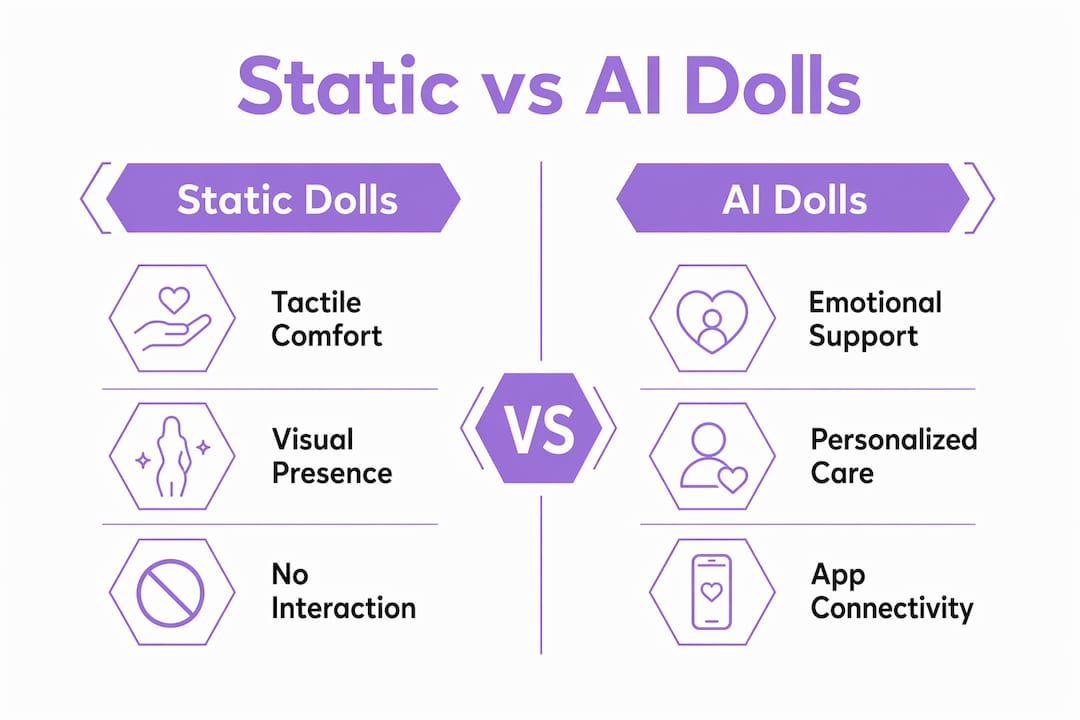
Here is how modern companion doll technology stacks up across model types:
| Feature | Static silicone models | AI-integrated models |
|---|---|---|
| Oxytocin trigger | Yes, through tactile contact | Yes, through touch and voice |
| Conversational memory | No | Yes |
| Medication reminders | No | Yes |
| Remote family interaction | No | Yes, via app |
| Emotional adaptation | No | Yes |
| Cost range | Lower entry point | Premium pricing |
The four most significant AI features driving adoption right now are:
- Conversational memory: The doll recalls previous interactions, creating a sense of continuity that static models cannot replicate.
- Personality adaptation: The AI adjusts tone and responses based on your mood patterns over time.
- Daily routine support: Reminders for medication, hydration, and meals add a practical caregiving layer.
- Remote app connectivity: Family members can send messages or check in through the doll's interface, reducing caregiver anxiety.
Pro Tip: If you are choosing between a static and an AI model, start with a high-quality silicone option. The oxytocin response from tactile contact alone is well-documented, and you can assess your emotional needs before committing to a premium AI model.
What are the common misconceptions about companion dolls?
The biggest misconception about companion dolls is that they are replacements for human relationships. They are not. Health professionals consistently describe them as supplements, not substitutes, for human connection. The distinction matters because it shapes how you use them and what you expect from them.
A companion doll provides what researchers call an "emotional stand-in": a presence that fills specific gaps, such as nighttime loneliness or the absence of physical touch, without replicating the full complexity of a human bond. Human relationships involve reciprocity, growth, and conflict resolution. A companion doll offers none of those things, and that is precisely its value in certain contexts.
The growing emotional economy reflects a broader cultural shift: people now invest in companion products as part of personal wellness, the same way they invest in therapy, meditation apps, or fitness equipment. Viewing companion dolls through this wellness lens removes much of the stigma and clarifies their actual purpose.
Common misconceptions worth addressing directly:
- "It signals social failure." Using a companion doll reflects a proactive choice to manage emotional health, not an inability to form human bonds.
- "Only isolated people use them." Families use AI companion dolls to supplement caregiving for aging loved ones, integrating them into active family care systems.
- "They create dependency." Dependency becomes a risk only when dolls replace rather than supplement human interaction. Used correctly, they reduce acute distress without crowding out real relationships.
- "They are purely physical objects." The psychological and emotional dimensions of companion dolls are well-documented and increasingly supported by clinical observation.
How can you integrate a companion doll responsibly?
Responsible integration starts with a clear purpose. Decide what specific emotional gap you want the doll to address: nighttime loneliness, physical comfort after loss, anxiety during social withdrawal, or supplemental care for an aging family member. A defined purpose keeps expectations realistic and use intentional.
Health professionals advise that companion dolls work best alongside family and community interaction, not as a replacement for it. The risk of over-reliance is real: if a doll becomes the primary source of social contact, it can quietly reduce the motivation to maintain human relationships. The doll should fill gaps, not become the whole picture.
When selecting a companion doll, match features to your actual emotional needs. If tactile comfort is the priority, a high-quality silicone model with realistic skin texture delivers that through the benefits of physical touch alone. If daily structure and conversation matter more, an AI-integrated model adds practical value. Youqdoll offers full customization of body type, skin tone, facial features, and hair color, so the companion you choose genuinely reflects your personal preferences rather than a generic default.
Pro Tip: Set a weekly check-in with yourself: are you still maintaining your human relationships at the same level? If the answer is no, recalibrate how you are using your companion doll. Treat it as a wellness tool with intentional boundaries, not an open-ended emotional escape.
Key Takeaways
A companion doll is a wellness tool that addresses specific emotional gaps through tactile comfort or AI interaction, and it works best when used alongside human connection rather than instead of it.
| Point | Details |
|---|---|
| Core definition | A companion doll provides emotional support and stable presence, not a replacement for human relationships. |
| Physiological effect | Silicone and TPE tactile contact triggers oxytocin release, delivering measurable emotional regulation. |
| Technology range | Models span static silicone to AI companions with memory, reminders, and remote family connectivity. |
| Responsible use | Health professionals recommend pairing companion dolls with ongoing family and community interaction. |
| Wellness framing | The emotional economy treats companion dolls as personal wellness tools, reducing stigma around their use. |
Why the conversation around companion dolls matters more than most people realize
The debate about companion dolls tends to get stuck on surface-level discomfort. People either dismiss them as strange or defend them defensively. Neither reaction gets at what is actually interesting here.
What strikes me most is how companion dolls expose a gap we rarely talk about openly: the difference between being surrounded by people and actually feeling accompanied. Loneliness is not about headcount. Plenty of people in full households feel profoundly alone. A companion doll does not solve that deeper problem, but it addresses the immediate, physical dimension of it in a way that is honest and measurable.
The research on oxytocin release from tactile contact is not surprising to anyone who has ever felt calmer holding a pet or a weighted blanket. What is surprising is how long it took us to apply that understanding to purpose-built companion objects for adults. The stigma has always been the barrier, not the science.
I think the most useful frame is this: companion dolls are a category of wellness tool, the same as a therapy app or a meditation cushion. They are not magic, and they are not a cure for loneliness. But for specific emotional needs, at specific moments, they deliver real relief. Dismissing that because the object looks human is a bias worth examining.
The ethical questions around AI companion dolls are genuinely worth watching. Privacy concerns with data collection are real, and the line between helpful daily support and dependency needs active management. But those are design and policy questions, not reasons to reject the category entirely.
— Alfie
Youqdoll's companion collection: crafted for your needs
Finding a companion doll that actually fits your preferences takes more than browsing a generic catalog. Youqdoll builds each doll to your exact specifications: body type, skin tone, facial features, and hair color are all yours to choose.

Every Youqdoll ships discreetly and comes with a 100% satisfaction guarantee. Whether you are looking for a lifelike silicone companion for physical comfort or a fully customized figure that reflects your personal taste, the best-selling Youqdoll collection is the right place to start. For readers ready to invest in a premium model, the in-stock selection shows what is available and ready to ship today.
FAQ
What does companion doll mean in simple terms?
A companion doll is a physical object, typically made from silicone or TPE, designed to provide emotional support, comfort, and a stable presence for people experiencing loneliness or seeking intimacy.
Are companion dolls the same as emotional support dolls?
Companion dolls and emotional support dolls overlap significantly. Both address loneliness and provide tactile comfort, though emotional support dolls are sometimes used in therapeutic settings for specific conditions like grief or anxiety.
Do companion dolls actually reduce loneliness?
Research shows elderly users reported a 23% reduction in depression symptoms and a 31% increase in life satisfaction when using companion dolls, confirming measurable emotional benefit.
What is the difference between a static and an AI companion doll?
A static companion doll provides tactile and visual comfort through physical presence alone. An AI companion doll adds conversational memory, personality adaptation, and daily routine reminders for a more interactive experience.
Can companion dolls replace human relationships?
Health professionals are clear: companion dolls supplement human connection rather than replace it. Over-reliance without maintaining family and community contact carries a risk of reducing vital human interaction.