

10 Minute Material First Anal Safety Routine for Sex Doll Owners
Yes, you can use your doll’s anal cavity safely. The rule is simple: clean it after every use, use only a water-based, doll-safe lubricant, and follow a material-specific routine of irrigation, agitation, and thorough rinsing. Dry it completely before you powder anything, and never let oil-based or silicone-based lube near TPE. Skip any one of these steps and you’re inviting bacteria, mold, or a canal that degrades much faster than it should.
TL;DR:
- Use only water-based, doll-safe lubricant and avoid any oil-based or silicone lubricants on TPE, as they cause material degradation over time.
- Clean the anal cavity immediately after each use with irrigation, agitation, and multiple rinses, followed by thorough drying, to prevent bacteria or mold growth.
- Employ forced or pump-assisted drying and confirm moisture removal with a cotton swab to prevent trapped water that promotes microbial growth.
- Never use abrasive cleaners, scented soaps, or alcohol-based products on TPE cylinders to avoid damaging the material’s surface and texture.
- If mold, odor, or persistent dampness appears, extend cleaning and drying cycles carefully and consult the manufacturer for repairs or repairs.
Table of Contents
- Sex Doll Anal Safety: Choosing the Right Materials and Lubricants
- How Do You Clean a Sex Doll’s Anal Cavity Step by Step?
- Drying and Storing Your Doll Without Trapping Moisture
- Avoiding Damage: What to Never Do During Anal Use or Cleanup
- Fixing Odor, Tackiness, Tears, and Lingering Moisture
- Insertion Technique: How to Use Your Doll Without Causing Damage
- Tools Worth Having: Plugs, Brushes, and Cleaning Accessories
- Warning Signs: Infection, Mold, and When to Worry
- Cleaning Detachable and Removable Anal Inserts
- Should You Use Condoms During Anal Play With Your Doll?
- Why Manufacturer Guidance Beats Guesswork
- Find a Doll Built for the Care Routine You’ll Actually Follow
- Sources
Sex Doll Anal Safety: Choosing the Right Materials and Lubricants
Your doll’s body chemistry matters more than most owners realize. TPE (thermoplastic elastomer) is porous and absorbs oils. Silicone is denser and closes that door almost completely. That single difference dictates almost everything else about anal safety, from lube choice to water temperature to what you can wipe her down with in a pinch.
TPE breaks down when it meets oil-based or silicone-based lubricants. The oils migrate into the material, softening it and leaving it sticky or degraded within weeks. Silicone dolls tolerate more, but silicone-based lube on a silicone doll can still cause a gummy surface reaction over time, so water-based stays the safer default for both.
Your best bet is a water-based, doll-safe lubricant that rinses out clean and doesn’t leave residue trapped in the canal’s texture. Coeros is one worth knowing about: it’s FDA 510(k) cleared, water-soluble, and specifically formulated to not gum up over repeated use. That clearance matters because it means the formula has passed a regulatory bar most generic lubes never touch.
For cleaning, dedicated toy cleaners do the job without the risk that comes with household products. A few rules worth memorizing:
- Use water-based lube exclusively on TPE dolls, and prefer it on silicone too.
- Reach for a dedicated intimate toy cleaner or an unscented, alcohol-free baby wash for rinsing, never a scented soap.
- Skip baby wipes on TPE entirely. Most contain detergents and preservatives that damage the material, though silicone tolerates an occasional unscented wipe for quick external touch-ups.
- Keep water in the 85 to 100°F range for TPE. Anything past 104°F starts softening the material, and prolonged heat can cause visible deformation. Silicone handles heat up to roughly 120°F without the same risk.
If you’re still deciding between materials, it’s worth reading through how TPE and silicone compare on maintenance demands before you commit to one.
How Do You Clean a Sex Doll’s Anal Cavity Step by Step?
The routine below takes about ten minutes and should happen every single time, not just when you remember. Skipping a session lets bacteria establish a foothold that gets progressively harder to remove.
- First flush. Fill an irrigator (a simple bulb or piston syringe designed for internal cleaning) with lukewarm water appropriate for the doll’s material. Insert the nozzle gently, never forcing it past resistance, and flush out bulk residue. This is a mechanical rinse, nothing more.
- Soap and agitation. Refill the irrigator with a diluted toy cleaner solution. Flush the canal, then use a gloved finger or a soft silicone brush to agitate the textured walls for about a minute. This step is the one owners skip most often, and it’s the one that matters most: residue trapped in the canal’s ridges is the primary source of odor complaints down the line.
- Triple rinse. Refill with clean warm water and flush repeatedly, three times minimum, until the runoff shows no slickness or soap film. If it still feels slippery on the fourth pass, rinse a fifth time.
- Drain and position. Tilt the doll or prop her in a position that lets gravity pull water out of the cavity rather than pooling inside it. A slight downward angle at the hips speeds this along considerably.
- Initial pat-dry. Use a microfiber cloth to wipe the entrance and outer folds before moving to the drying phase covered next.
Pro Tip: Keep two microfiber cloths in rotation, one for cleaning and one reserved only for drying. Cross-contaminating them defeats the purpose of the whole routine.
Never jam an irrigator nozzle in past where it meets resistance. TPE canals are more delicate than they look, and forcing a tool through a tight spot can tear the material rather than clean it. Silicone is more forgiving here, but “forgiving” doesn’t mean invincible.
Drying and Storing Your Doll Without Trapping Moisture
Drying matters just as much as cleaning, and it’s the step most owners rush. A canal that looks dry on the surface can still hold moisture deep inside, and that trapped water is exactly what mold and bacteria need to establish themselves.
Forced drying with a drying rod or a small pump attachment beats a passive pat-and-air approach every time. These tools push air through the cavity rather than relying on ambient evaporation, which can take hours longer and still miss pockets. If you don’t own a rod, a hairdryer on the coolest, lowest setting held several inches away works as a backup, though never on TPE with heat above room temperature.
To confirm the canal is actually dry, insert a clean cotton swab as deep as comfortably possible and check it after removal. If it comes out with any dampness or tint at all, keep drying. That’s not a formality. Powdering a canal that’s even slightly damp traps moisture against the walls and accelerates exactly the microbial growth you were trying to prevent.
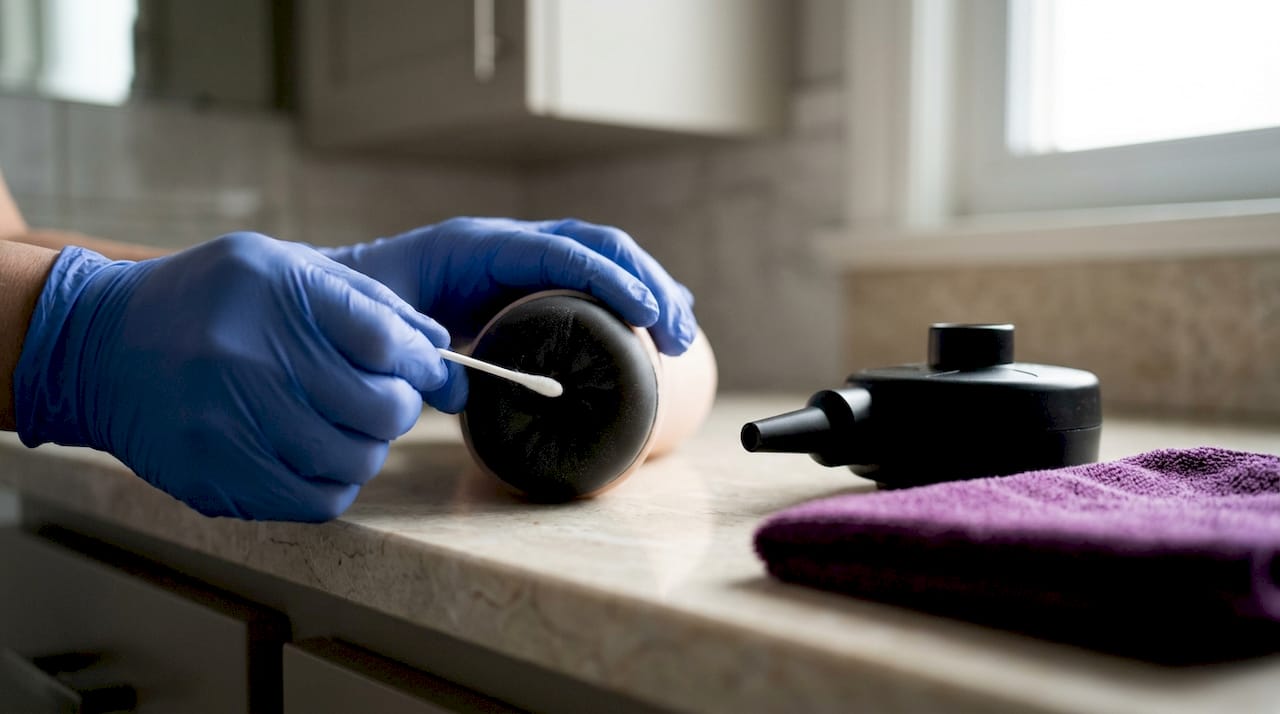
Once the swab test comes back bone dry, TPE surfaces benefit from a light dusting of pure cornstarch, never talc, never scented baby powder. Skip powdering the interior of any orifice; it belongs on the outer skin only. Silicone doesn’t need this step at all.
For storage:
- Overnight storage just needs a dry, breathable position with limbs loosely arranged to avoid joint stress.
- Multi-week storage calls for a dust sheet, not a plastic bag that traps humidity.
- Keep her away from dark or unwashed fabric. Dye transfer onto TPE is common and often permanent.
More on positioning and long-term storage lives in the full care and cleaning guide.
Avoiding Damage: What to Never Do During Anal Use or Cleanup
Most damage isn’t dramatic. It’s slow, cumulative, and almost always traceable to one of a handful of habits.
- Never use oil-based or silicone-based lubricants on TPE. Even a single use can start softening the material, and the effect compounds with each repeat.
- Keep water under 100°F for TPE cleaning and bathing. Higher temperatures risk permanent softening or visible warping around the entrance.
- Skip abrasive sponges, scented cleaners, or anything with alcohol on TPE surfaces. Gentle agitation with a soft brush is enough; scrubbing hard just wears down the texture faster.
- Powder only after the cotton-swab test confirms full dryness, and never inside the cavity itself.
- Wash new clothing before dressing her, especially dark denim or unwashed dyed fabric, since color transfer onto TPE is common and rarely comes back out.
Pro Tip: If you’re not sure whether a lubricant is safe, check the label for “silicone-based” or “oil-based” in the ingredients. When in doubt, water-based is always the safer default regardless of material.
Fixing Odor, Tackiness, Tears, and Lingering Moisture
Odor usually means residue got missed during agitation. Repeat the full irrigation and toy-cleaner cycle, then extend drying time by several hours before resealing storage.
Tackiness on TPE responds to a thorough clean followed by cornstarch, never an oil-based fix, which only worsens the stickiness over time.
Small tears call for an immediate pause on that area and a material-specific repair kit, or a conversation with the manufacturer about repair options.
Persistent dampness after drying means repeating the forced-drying step and checking for pooled water in low spots you may have missed.
Insertion Technique: How to Use Your Doll Without Causing Damage
The anal canal on most lifelike dolls is molded with a specific depth and angle in mind, and working against that geometry is the fastest way to cause a tear or permanent stretching. Slow, deliberate insertion beats speed every time, particularly during the first few uses when you’re still learning how a specific doll’s canal responds.
Apply lubricant generously before any insertion, both on the entrance and along the length of whatever is being inserted. TPE and silicone both rely on lubrication to reduce friction against internal walls, and a dry pass is one of the more common causes of micro-tears that go unnoticed until they turn into bigger problems.
Move with the natural curve of the canal rather than forcing a straight path. Most dolls are designed with a slight internal angle, and pushing straight against resistance stresses the material at a single point rather than distributing pressure evenly.
Avoid extended sessions without pausing to reapply lubricant. Friction increases as lube thins out, and that’s when damage risk climbs fastest. A quick pause to add more lubricant every few minutes costs nothing and protects the material significantly.
If you’re shopping specifically for anal-capable models, it’s worth reviewing what separates a well-engineered canal from a poorly reinforced one before you buy, covered in more detail in this breakdown of anal-capable doll features.
Tools Worth Having: Plugs, Brushes, and Cleaning Accessories
A small toolkit makes the difference between a five-minute cleanup and a frustrating half hour of improvising with kitchen supplies.
An irrigator, either a bulb syringe or a piston-style tool designed for internal cleaning, is the single most important accessory you’ll own. It’s what makes the flush, agitate, and rinse cycle possible without soaking the rest of the doll.
A soft silicone cleaning brush, small enough to navigate the canal without forcing, handles the agitation phase far better than a finger alone, particularly for textured interiors where residue likes to hide in the ridges.
Nitrile or latex gloves keep the cleaning process sanitary and protect your own skin from repeated exposure to cleaning solutions. Keep a dedicated pair just for this task.
Anal plugs designed for use between sessions can help maintain the canal’s shape on dolls that see infrequent use, though they should be cleaned with the same rigor as everything else before and after insertion.
Microfiber cloths, at least two kept in separate rotation for cleaning versus drying, round out the essentials. A drying rod or small pump attachment, mentioned earlier for the drying phase, belongs on this list too if you’re using your doll’s anal cavity regularly enough to justify the investment.

Warning Signs: Infection, Mold, and When to Worry
A healthy canal has no smell beyond a faint neutral scent from whatever cleaner you last used. Anything sour, musty, or distinctly “off” is worth investigating immediately rather than waiting to see if it resolves on its own.
Visible discoloration inside the cavity, particularly dark spots, fuzzy patches, or a slimy texture on the swab you use for dryness testing, points toward mold growth. This typically develops when moisture got trapped after a session that wasn’t dried thoroughly, sometimes compounded by premature powdering.
A persistent damp feeling that doesn’t resolve after a full forced-drying cycle is another red flag. If the swab test keeps coming back damp session after session despite proper drying technique, there may be a design issue trapping water deeper in the canal than a standard routine reaches.
If you spot any of these signs, stop use immediately and run a full deep-clean cycle: complete irrigation, extended agitation with toy cleaner, multiple rinses, then an extended forced-drying period of several hours longer than usual. If mold or odor returns after that full cycle, it’s worth contacting the manufacturer about internal inspection rather than continuing to use the cavity as-is.
Cleaning Detachable and Removable Anal Inserts
Some doll models use a removable insert for the anal canal rather than a fixed cavity molded into the body. These inserts actually simplify hygiene considerably, since you can clean them away from the doll’s body and inspect them far more thoroughly than a fixed cavity allows.
Because you can submerge a removable insert fully (something you should never do to the doll’s torso), you get a more complete clean than a fixed cavity ever allows.
Dry the insert completely before reinserting it, using the same cotton-swab test to confirm. A damp insert sealed back inside the body creates a closed, moist environment that’s practically an invitation for mold, arguably worse than a fixed cavity because airflow is even more limited once it’s locked back in place.
Store removable inserts separately when not in use, ideally in a breathable pouch away from dust and direct sunlight, which can degrade both TPE and silicone over extended exposure.
Should You Use Condoms During Anal Play With Your Doll?
Condoms add a genuinely useful layer of hygiene protection, and many doll owners use them specifically for anal play even though they’re not strictly necessary. A condom reduces direct contact between fluids and the canal’s interior surface, which cuts down on how much cleaning the cavity actually needs afterward.
Use a water-based lubricant with any condom, the same rule that applies to the canal itself, since oil-based lubricants degrade latex condoms just as readily as they degrade TPE. If you’re using polyisoprene or polyurethane condoms instead of latex, the same water-based-only rule still applies for material safety on the doll’s side.
The main advantage isn’t just hygiene, it’s time. A condom used for anal play means less deep cleaning afterward, since much of what would otherwise need flushing and rinsing stays contained. It’s not a replacement for the full cleaning routine, but it does shorten the intensity of what’s required afterward, particularly useful if you’re using the doll more frequently and want to reduce wear on the canal’s interior surface over time.
Why Manufacturer Guidance Beats Guesswork
Most damage I see traced back to owner habits comes from skipping the boring parts: the swab test, the third rinse, the wait before powdering. None of it is complicated, but all of it requires patience most people don’t budget for on a Tuesday night.
[brand_signal]
[author_bio]
Care resources are built specifically because material choice changes what a safe routine looks like. If anal use matters to you, confirm your material before you buy, not after.
— Alfie
Find a Doll Built for the Care Routine You’ll Actually Follow
Every material comes with tradeoffs, and the right one depends on how much maintenance time you’re actually willing to spend. Silicone tolerates more heat and resists oil-based products better, which makes cleanup more forgiving if you’re the type who wants a shorter routine. TPE offers a different feel and price point, but it demands stricter temperature control and lube discipline in exchange.

Both material options are available with full customization on body type, skin tone, and facial features, so you’re not choosing a maintenance routine at the expense of getting the companion you actually want. The 75cm Silicone BJD Doll is a solid entry point if silicone’s easier cleanup routine appeals to you, while the Mya TPE doll with a silicone head shows how the two materials can work together in one build. Review the care guidance for your chosen material before you order, then reach out for customization options.
Sources
Technical claims in this guide draw from published care protocols on sex doll cleaning and maintenance, UK-based doll care guidance, and product documentation for FDA-cleared water-based lubricant. Each source informed the temperature ranges, drying verification steps, and lubricant recommendations covered above.
- How to Clean a Sex Doll UK | Care Guide | BondageBox
- Sex Doll Cleaning & Maintenance: Complete Care Protocol for 2026