

Sex Doll Body Types: How to Pick the Right Shape
The main sex doll body types are mini/petite, slim/standard, athletic, curvy/BBW, tall/muscular, and torso-only. Each one solves a different problem. Petite frames solve storage and weight. Standard silicone builds like the ones Youqdoll ships solve realism. Curvy and BBW shapes solve visual presence. Torso-only solves budget and space. The body type you pick determines almost everything else about ownership: how much the doll weighs, how it feels to move, how much upkeep it needs, and how close it comes to human proportions instead of an exaggerated ideal.
Here’s a fast breakdown before we get into specs and materials:
- Mini/petite (under 5 feet, under 66 lbs): best for first-time buyers, tight closets, or anyone who lives with roommates and needs discreet storage.
- Slim/standard (5’2"–5’6"): the most common category, and the one that best mirrors typical human proportions for buyers who want realism over fantasy.
- Athletic: defined muscle tone and a leaner build, popular with buyers who want a toned aesthetic without heavy curves.
- Curvy/BBW: larger bust, hip, and thigh volume, chosen for visual drama and a fuller feel during use.
- Tall/muscular: taller frames (5’7" and up) built for buyers who want commanding presence and don’t mind extra handling weight.
- Torso-only: no legs, no head in most cases, built for buyers who want lower cost, easier storage, and less lifting.
Material and skeleton choices reshape every one of these categories. A silicone torso feels nothing like a hollow TPE full-body doll, and a weighted core turns a “petite” doll into something surprisingly hard to reposition solo. Body type gets you in the door. Material and construction decide whether you’ll actually enjoy owning it.
Key Takeaways
Body type sets the frame for realism, weight, and storage, but material and skeleton choice determine whether that body type is actually comfortable to own long term.
| Point | Details |
|---|---|
| Tight storage or first purchase | Choose mini/petite or torso-only for the lightest weight and simplest setup. |
| Realism over fantasy | Choose slim/standard in silicone, the category closest to typical adult proportions. |
| Heavy lifting concerns | Avoid curvy/BBW and tall/muscular unless you have help moving 100+ pounds. |
| Fixed budget | Torso-only or petite TPE builds cost the least across the market. |
| Full customization with standard realism | Youqdoll’s Scarlett and Tiffany 166cm silicone models offer standard-height proportions with independent control over breast size, skin tone, and skeleton. |
Table of Contents
- What Are the Different Sex Doll Body Types?
- TPE vs Silicone: Materials and Construction
- How Poseability and Size Affect Handling
- Customization Options by Body Type
- Matching Body Types to What You Actually Want
- What to Ask a Seller Before You Buy
- What Research Says About Doll Realism vs Exaggeration
- Why Realism Should Never Be a Compromise
- Find Your Body Type in the Youqdoll Lineup
- Frequently Asked Questions
- Sources
What Are the Different Sex Doll Body Types?
Every body type in this market breaks down by silhouette, not just height. Two dolls can share a listed height of 5’5" and look completely different once you factor in waist-to-hip ratio, chest projection, and shoulder width. That’s the detail most buyers miss when they shop by number alone.
Mini and petite dolls typically run under 5 feet tall and under 66 pounds. Shoulders and hips sit close in width, with minimal bust or hip projection. These are the easiest dolls to reposition, dress, and hide in a closet.
Slim/standard builds sit in the 5’2" to 5’6" range with a moderate waist-to-hip differential, roughly proportional to an average adult frame. This category best represents realistic doll physiques because the proportions track closer to population averages than any other type on the market.
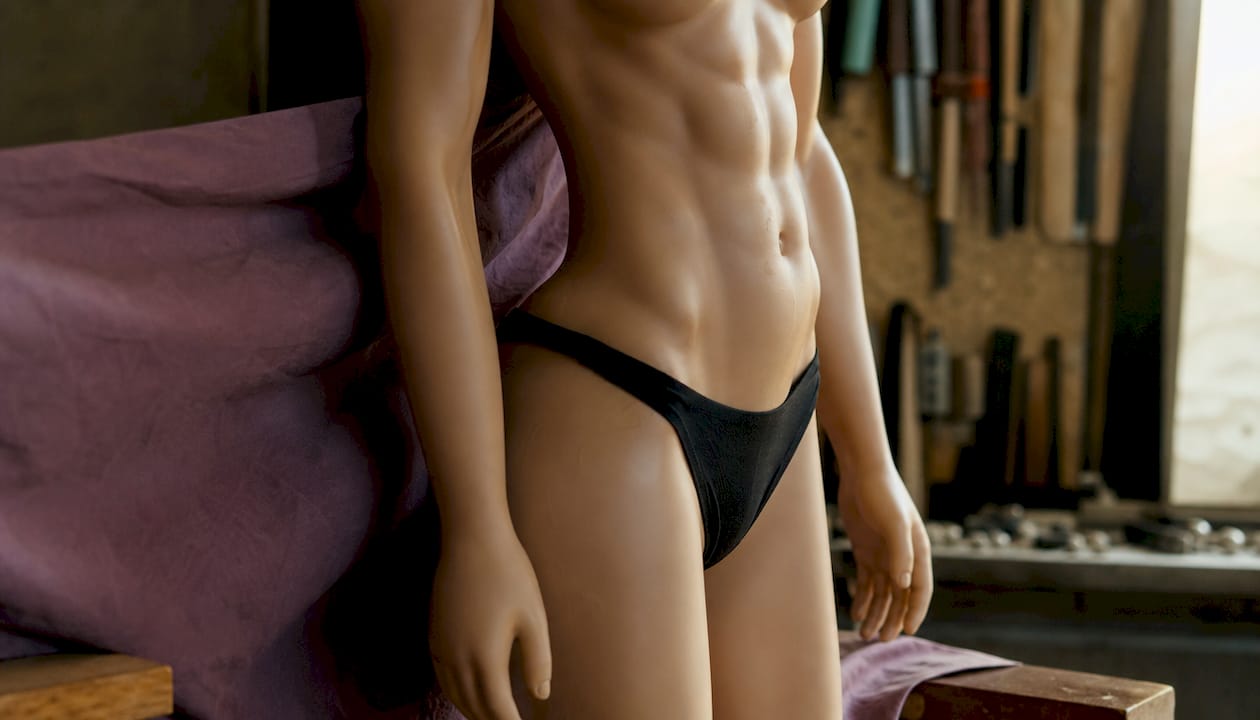
Athletic builds show visible muscle definition through the shoulders, abs, and thighs, paired with a narrower hip. Sellers usually shoot these dolls in three-quarter poses to show off shoulder-to-waist taper, since a straight front shot hides the muscle detail entirely.
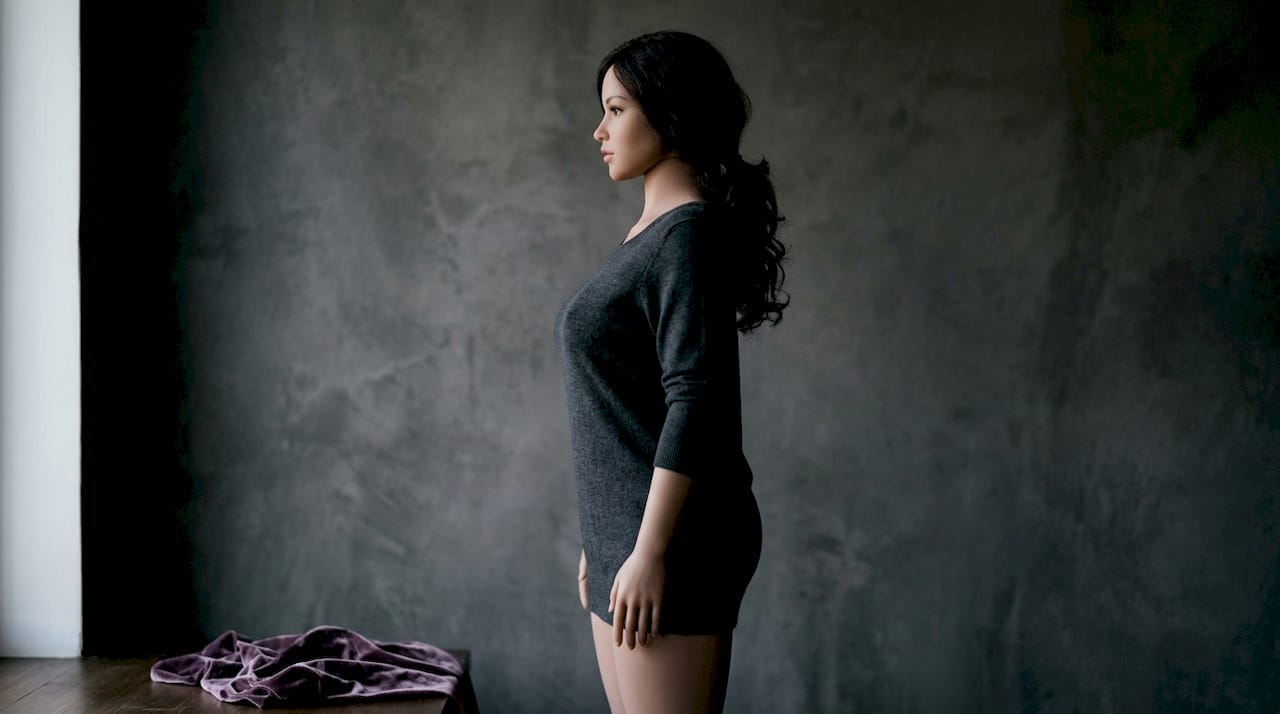
Curvy and BBW dolls carry noticeably larger bust, hip, and thigh measurements relative to waist size. The waist-to-hip ratio is the number that matters here, not overall weight. A curvy doll at 5’4" and 90 pounds can look dramatically fuller than a standard doll at the same height because the mass sits differently.
Pear-shaped builds carry weight in the hips and thighs with a smaller bust and narrower shoulders. Hourglass builds balance bust and hip measurements around a defined waist. Both are variations on curvy sculpting rather than separate categories, but sellers who specialize in body diversity usually list them separately because the silhouette in clothing reads very differently.
Tall/muscular frames run 5’7" and taller, often paired with broader shoulders and a heavier weighted core for stability when standing. These dolls need the sturdiest skeletons on the market, which we’ll get to.
Torso-only models skip the legs and sometimes the head, focusing mass and detail on the chest, hips, and midsection. According to Wikipedia’s overview of sex doll construction, full-body dolls replicate a partner’s entire form with an articulated skeleton and skin-like materials, while torso models are built smaller and lighter around localized stimulation instead of full-body realism.
When you’re comparing listings, ask for four angles minimum: straight front, straight side, a 45-degree angle, and one clothed shot. The side profile is the one sellers skip most often, and it’s the single best angle for judging whether a “curvy” listing is genuinely curvy or just wearing padded photography.
One number worth remembering: across a sample of 757 commercially sold full-body dolls, researchers found an average height of about 161.5 cm (roughly 5’3") and an average weight near 37.1 kg (about 82 pounds). That’s noticeably below average adult female height and weight in the U.S., a pattern we’ll unpack later in this guide.
TPE vs Silicone: Materials and Construction
Material decides how a doll feels under your hands far more than body type does. The two dominant options are thermoplastic elastomer (TPE) and platinum-cure silicone, and they behave almost like different products entirely.
Silicone holds fine detail (skin pores, veining, texture) better than TPE and resists staining, odor absorption, and oil buildup more effectively over time, according to FDA guidance on silicone materials used in consumer and medical-adjacent products. TPE feels softer and jigglier at first touch, costs less to manufacture, and is more porous, which means it absorbs oils from lubricants and skin contact faster and needs more frequent, careful cleaning.
| Factor | TPE | Silicone |
|---|---|---|
| Realism/feel | Very soft, jiggly | Firmer, closer to real skin tension |
| Durability | Tears more easily, shorter lifespan | More tear-resistant, ages slower |
| Odor/porosity | Absorbs oils, can develop odor | Non-porous, resists odor and staining |
| Price | Generally lower cost | Generally higher cost |
| Maintenance | Needs cornstarch, frequent cleaning | Easier to clean, tolerates mild soap |
| Allergy risk | Rare sensitivities reported | Considered hypoallergenic by most makers |
Beyond the skin, the internal build changes everything about handling. A hollow core keeps weight down and cost lower, which suits petite and torso-only builds where lightness is the whole point. A weighted or gel-filled core adds realistic heft and jiggle, but it turns a 5’5" doll into something that genuinely takes two hands and some planning to reposition. Polymer science literature on silicone and elastomer construction explains why manufacturers layer skins over foam or gel cores: it lets them tune tactile softness in the chest and hips independently from the firmness of arms and legs, which is how a doll can feel soft where you want softness and stable everywhere else.
- TPE dolls typically cost less per body type but require cornstarch dusting after cleaning to keep the surface from getting tacky.
- Silicone dolls tolerate mild soap and water more easily and don’t need powder, but the material itself costs more to produce.
- Neither material should be cleaned with alcohol-based solvents, which degrade both TPE and silicone surfaces over time.
- Storage matters as much as cleaning: heat and direct sunlight break down both materials, silicone somewhat more slowly than TPE.
Pro Tip: Ask the seller whether the skin is single-layer or double-layer silicone before you buy a curvy or BBW model. Double-layer construction (a softer outer skin over a firmer inner shell) is what makes larger breast and hip sculpts feel soft on the surface without going shapeless over time.
How Poseability and Size Affect Handling
The skeleton inside the doll, not the body type on the label, determines what positions are actually usable and how much weight you’re wrestling with during setup. Three skeleton types dominate the market.
Metal skeletons (usually steel joints in an aluminum frame) offer the widest range of motion and the best standing stability, which is why tall and muscular builds almost always use them. PVC skeletons are lighter and cheaper but offer fewer stable poses and generally can’t support standing weight for long. Carbon fiber skeletons split the difference: lighter than steel, strong enough for standing poses, and increasingly common in premium tall or heavy-set dolls where every pound of skeleton weight competes with the silicone shell weight.
The average full-body doll in the PMC sample weighed about 37.1 kg, which is roughly 82 pounds, but that average blends everything from petite to curvy sculpts together. Individual curvy or tall models regularly exceed 100 pounds once you add a weighted core.
A few handling basics matter regardless of body type:
- Always lift from the torso, never from a single limb, since joints are the first thing to fail under uneven stress.
- Store heavier dolls lying flat or on a reinforced hanging mount rather than standing for long periods, which reduces joint strain at the hips and knees.
- Two-person handling isn’t overkill for anything over 100 pounds. Bathroom transfers and storage moves are where most reported joint damage happens.
- Let a doll return to room temperature before repositioning it. Cold silicone and cold TPE are both more prone to tearing at the joints.
Poseability and material interact more than most buyers expect. A silicone skin over a heavily weighted gel core (common in curvy and BBW builds) gives you gorgeous jiggle and realistic sag, but it also means the skeleton is doing more work to hold a pose. If long, complex positioning matters to you more than visual fullness, a lighter hollow-core build with a metal skeleton will actually serve you better than the heaviest, curviest option on the page.
Customization Options by Body Type
Body shape sets the frame. Customization is what makes the doll feel like yours, and most of it can layer onto any of the body types above without much restriction, with a few practical exceptions worth knowing before you configure an order.
- Breast style: most sellers offer gel-filled or fully soft breast inserts across all body types, though petite frames sometimes cap the maximum cup size available to keep the sculpt proportional.
- Genital options: fixed or removable inserts are standard across full-body dolls; torso-only models typically ship with a fixed configuration since there’s no leg structure to route access through.
- Face and head: most standard and slim/athletic body types support interchangeable heads on a universal neck connector, so you can swap faces without swapping the body.
- Skin tone: available across every body type, though very pale or very deep tones sometimes carry longer production times depending on the batch.
- Hair: wigs are sized by head circumference, not body type, so petite and tall dolls often share the same wig sizing if the head sculpt is similar.
- Clothing fit: slim/standard and athletic bodies share the widest range of off-the-shelf outfit compatibility; curvy and BBW frames often need doll-specific or adjustable clothing.
Incremental customization adds up in ways worth budgeting for. Upgrading from a standard chest to a larger gel-filled bust typically adds a modest premium over the base model, and a fully custom face sculpt (rather than a catalog face) costs more than a stock head with a wig and makeup change. If you want a specific skin tone paired with a specific eye color and a non-stock hairstyle, expect that to stack as three separate line items rather than one flat customization fee.
One planning tip that saves buyer’s remorse: decide up front whether you want scale-consistent realism or an intentional fantasy silhouette. A petite 5’0" frame paired with the largest available bust option creates a proportion that reads as deliberately exaggerated rather than realistic, which is fine if that’s the look you want, but it’s a mismatch if your goal was a doll that feels like an average adult body.
Matching Body Types to What You Actually Want
Different buyers walk in with different priorities, and the “best” body type genuinely depends on which constraint you’re optimizing for.
If realism is the priority: slim/standard builds in the 5’2" to 5’6" range on a silicone shell come closest to population-average human proportions. You’ll pay more for silicone’s detail and durability, but the payoff is a doll that doesn’t read as stylized in daylight photos.
If photography or visual presence matters most: tall and curvy builds hold up best on camera because height and volume both read clearly through a lens. The tradeoff is a carbon fiber or reinforced metal skeleton to hold standing poses safely, which adds cost.
If easy handling is the priority: mini/petite and torso-only builds win outright. Nothing over 65 pounds and a hollow TPE or lightweight silicone shell means solo setup, easy storage, and simple cleaning.
If budget is the deciding factor: torso-only models in TPE cost the least of any category, followed by petite full-body TPE dolls. Silicone and larger body types both add cost independently, so a curvy silicone full-body doll sits at the top of the price range for the opposite reasons.
If fantasy aesthetics matter more than realism: curvy/BBW and heavily customized athletic builds give you the most room to exaggerate proportions intentionally, since these categories already depart furthest from average human measurements.
| Buyer goal | Best-fit body types | Skeleton need | Storage/handling note |
|---|---|---|---|
| Maximum realism | Slim/standard | Metal | Moderate weight, manageable solo |
| Photography/display | Tall, curvy | Carbon fiber or reinforced metal | Needs stable standing support |
| Easiest handling | Mini/petite, torso-only | PVC or none | One-person lift, minimal storage space |
| Fantasy/exaggerated look | Curvy/BBW, muscular athletic | Reinforced metal | Heavier, often needs two-person handling |
| Tight budget | Torso-only, petite TPE | Minimal | Lowest cost, smallest footprint |
Before you commit, answer four questions honestly: How much closet or under-bed space do you actually have? Can you comfortably lift 80 to 120 pounds by yourself, or will you need help? What’s your real ceiling on price once customization is added in? And do you want a doll that could pass as an average adult body, or one built around an idealized shape? Those four answers narrow the field faster than any spec sheet.
What to Ask a Seller Before You Buy
A good listing tells you everything up front. A vague one is the biggest red flag in this market, and most buyer regret traces back to specs that were assumed rather than confirmed.
Request these specs before you pay anything:
- Exact material (TPE or silicone, and whether the head and body match).
- Full height and weight, and whether the stated weight includes the head, since listings frequently omit this distinction and it can shift the real number by several pounds.
- Skeleton type and whether the doll can stand unsupported.
- Which parts are removable (head, hands, feet) and how they attach.
- Written cleaning and maintenance instructions specific to the material.
- Warranty terms and the return policy in case of shipping damage.
Copy these questions directly to a seller if a listing feels thin:
- Is the weight listed with or without the head attached?
- What skeleton is inside, and can this specific body type stand without support?
- Are the photos of this exact unit, or stock images of the sculpt?
- What’s the estimated production and shipping timeline for a custom order?
- What happens if the doll arrives with a manufacturing defect?
Watch for these red flags: a seller who gives inconsistent height or weight numbers between the listing and their messages, product photos that are only artistically posed with no plain front/side shots, no written care instructions anywhere on the page, and vague or absent warranty language. Discreet plain-box shipping should be standard, not something you have to request as a favor, and any seller unwilling to send a quick verification video before a high-value order is worth a second thought.
What Research Says About Doll Realism vs Exaggeration
Most “lifelike” marketing claims deserve a second look, and the research backs that skepticism up. An empirical study analyzing 757 commercially available full-body sex dolls found that the majority are hypergendered and hypersexualized rather than proportionally realistic. Nearly half of female-sexed dolls in the sample had bust sizes in the E to O cup range, well above typical population distributions.
That gap matters for buyers because it reframes what “realistic” actually means in this market. A doll can be beautifully sculpted and still be intentionally exaggerated rather than proportionally average. Neither choice is wrong. The problem is buying one while thinking you’re getting the other.
Pro Tip: Ask sellers for raw waist, hip, and bust measurements in inches, not just marketing terms like “curvy” or “petite.” Compare those numbers to your own reference point (a real garment size or a tape measure against a partner’s proportions) before you order, especially on custom builds where you’re choosing every measurement yourself.
A few numbers worth keeping in mind while you shop: the study’s average doll height came out to about 161.5 cm (5’3") and average weight to 37.1 kg (about 82 pounds), both below typical U.S. adult averages. TPE was the dominant material in the sample, with silicone representing a smaller but growing minority. If your goal is a doll matched to real population averages rather than an idealized shape, ask specifically for measurements closer to those adult norms rather than trusting a “realistic” label on its own.
Why Realism Should Never Be a Compromise
Here’s an opinion the industry doesn’t say out loud often enough: most buyers get talked into choosing between “realistic” and “customized,” as if those two things pull against each other. They don’t. The data on hypergendering in mass-market dolls exists precisely because most manufacturers build one sculpt and sell it at scale, exaggerating proportions because a dramatic silhouette photographs better than an average one. That’s a manufacturing shortcut dressed up as a style choice.
Full customization solves the actual problem, not just the marketing problem. When you can set your own height, weight distribution, bust size, and skeleton type independently, you’re not choosing between realism and personalization. You’re deciding, feature by feature, how close to population averages or how far into fantasy territory you want to go, and you get to make that decision on every measurement instead of accepting whichever tradeoff a fixed sculpt bakes in.
Youqdoll’s approach starts from that same premise: realism and customization aren’t opposing goals, they’re two dials on the same control panel. Buyers who want a doll that reads as an average adult body can dial toward that. Buyers who want something more dramatic can dial the other way. Either way, the choice belongs to the buyer, not to whatever sculpt happened to be profitable to mass-produce. If you’re weighing companionship benefits alongside body type, it’s worth reading about the wellbeing side of doll ownership as part of that decision.
Find Your Body Type in the Youqdoll Lineup
Youqdoll builds around the exact tradeoff this guide has walked through: pick your body type, then customize every measurement inside it instead of settling for a fixed sculpt.

The Scarlett 166cm Silicone Sex Doll represents the slim/standard category at its most realistic. At 166cm, its proportions sit close to population-average adult height, and the full silicone shell holds fine skin detail better than TPE alternatives at the same size. The Tiffany 166cm Silicone Sex Doll shares that same standard-height frame but with a different sculpt, useful for comparing how much variation exists inside a single body type before you even touch the customization panel.
Both models let you adjust breast size, skin tone, face, and hair independently of the base body type, so you can lean the sculpt toward realistic scale or toward a more dramatic silhouette without changing the underlying skeleton or material quality. If storage space is tight, Youqdoll’s torso-only options cut weight and footprint dramatically while keeping the same silicone detail. Browse the current lineup, pick the body type that matches your space and realism goals, and configure the details from there.
Frequently Asked Questions
What is the most realistic sex doll body type? Slim/standard builds between 5’2" and 5’6" on a silicone shell come closest to typical adult human proportions, based on the population comparisons in the PMC study.
Are curvy or BBW dolls heavier to handle? Yes. Curvy and BBW builds typically run 90 to 120+ pounds once a weighted core is added, and moving them safely usually takes two people rather than one.
Is TPE or silicone better for a first-time buyer? TPE costs less and feels softer at first touch, but silicone cleans more easily and holds detail longer. Budget and maintenance tolerance should decide the answer more than feel alone.
Do torso-only dolls come in different body types? Yes. Torso-only models still vary by bust size, hip width, and overall proportion, just without the legs or, in most cases, a head, which keeps weight and cost down.
Why do so many dolls look exaggerated compared to real bodies? Research analyzing hundreds of commercial dolls found many are hypergendered by design, with slimmer female frames and larger bust sizes than typical population averages, largely because dramatic sculpts market and photograph more dramatically than average ones.
Sources
- Sex Doll Specifications versus Human Body Characteristics — PMC
- Sex doll — Wikipedia
- ACS Publications — Polymer/Silicone technical reference