

Sex Doll Lifespan: What to Expect and How to Extend It
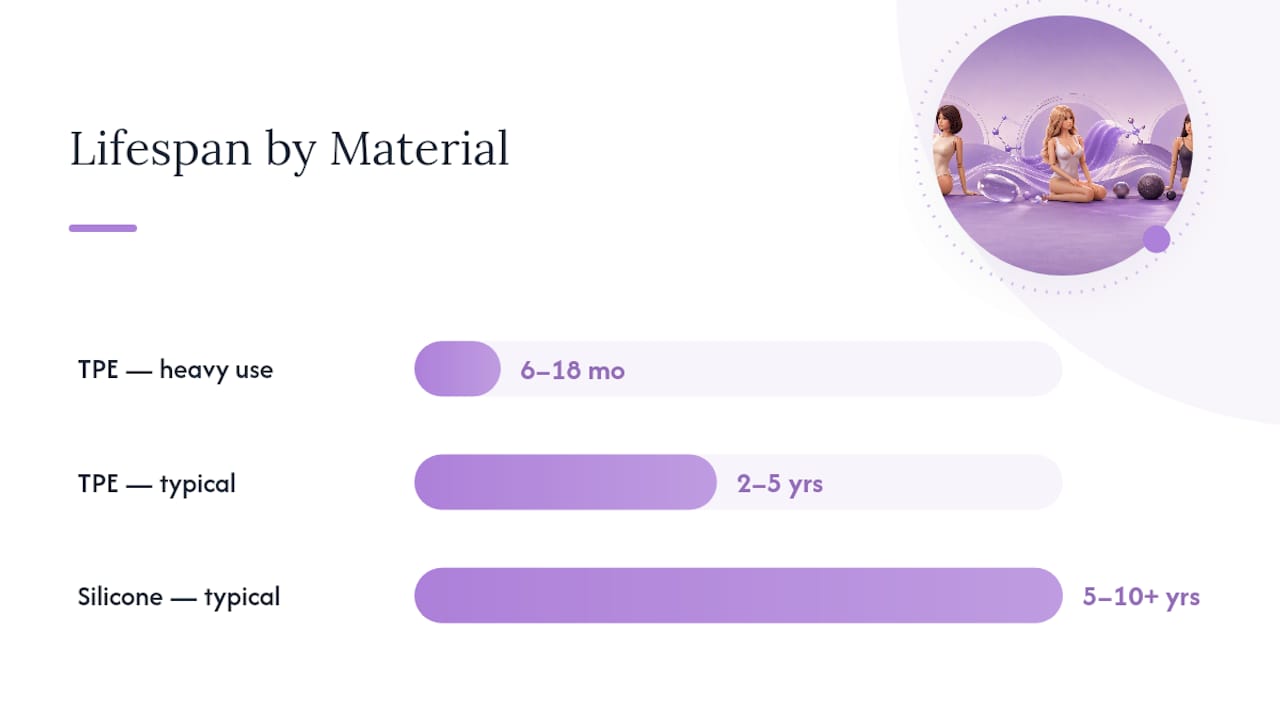
A well-maintained TPE doll typically lasts 2–5 years; a quality silicone doll can reach 5–10+ years or longer under meticulous care. According to industry support data, the realistic range across all product types runs roughly 2–10 years. The single biggest variable is not the price tag. It is what you do after every use.
Three factors determine where your doll lands in that range:
- Material (TPE vs. platinum silicone): porosity, tear resistance, and how easily each can be fully disinfected
- Cleaning and drying discipline: consistent post-use care, especially thorough drying, prevents the internal moisture damage that shortens life faster than anything else
- Frequency and handling: how often you use the doll and whether you avoid overstretching, improper posing, or oil-based product transfer
Manufacturer warranty terms and documented care instructions also matter. They set the baseline for what counts as covered damage and what does not.
Key Takeaways
With proper maintenance, a TPE doll lasts 2–5 years and a silicone doll 5–10+ years, and thorough drying after every cleaning session is the single habit that most determines where your doll lands in that range.
| Point | Details |
|---|---|
| TPE lifespan range | 2–5 years with proper care; as little as 6–18 months under heavy use with poor maintenance. |
| Silicone lifespan range | 5–10+ years with meticulous care; non-porous material makes full disinfection easier. |
| Drying is the top habit | Incomplete drying causes internal mold and odor, both of which are effectively irreversible. |
| Storage prevents deformation | Store flat or hanging in a neutral pose; remove dark clothing to prevent permanent dye transfer. |
| Youqdoll’s options | Silicone and TPE models with documented care guides; Scarlett and Tiffany are high-durability silicone choices. |
Table of Contents
- How does sex doll lifespan differ between TPE and silicone?
- How do frequency of use and handling affect how long a doll lasts?
- Step-by-step cleaning and maintenance for TPE and silicone dolls
- How should you store a doll to prevent stains and deformation?
- What repairs can you do yourself, and when do you need professional help?
- Signs it’s time to replace your doll
- Is a higher upfront investment in silicone actually worth it?
- What should you ask a manufacturer before buying?
- What most new owners get wrong about long-term ownership
- Youqdoll’s silicone and TPE options, built to last
- Sources
How does sex doll lifespan differ between TPE and silicone?
Material is the foundation of every lifespan conversation. TPE (thermoplastic elastomer) and platinum-cured silicone behave very differently under use and cleaning, and those differences compound over years.
TPE is soft, flexible, and skin-like in texture. It is also porous, which means bacteria and moisture can work into the surface if cleaning is incomplete. That porosity requires powdering every 2–4 weeks to maintain the skin’s texture and prevent tackiness. TPE is more affordable and lighter, but it is also more vulnerable to staining, oil transfer, and surface tearing. Manufacturer FAQ data places a well-maintained TPE doll at 2–5 years. Under heavy use with inconsistent care, a TPE-focused support article notes that significant wear can appear in as little as 6–18 months.
Platinum silicone is non-porous, which makes it far easier to disinfect completely. It holds detail better over time, resists staining, and tolerates a wider range of cleaning agents. The trade-off is cost: silicone dolls run higher upfront, and the material is denser and heavier. With proper care, silicone dolls typically reach 5–10+ years. A comprehensive ownership protocol puts the optimistic ceiling at 10+ years when maintenance is meticulous.
| Feature | TPE | Platinum Silicone |
|---|---|---|
| Porosity | Porous | Non-porous |
| Typical lifespan (with care) | 2–5 years | 5–10+ years |
| Powdering required | Every 2–4 weeks | Not required |
| Stain resistance | Lower | Higher |
| Disinfection ease | Moderate | High |
| Relative cost | Lower | Higher |
| Repairability | Small tears patch well | Deep cuts harder to restore |
One nuance worth knowing: small TPE rips can often be patched cleanly with the right kit. Silicone cuts that reach structural layers are harder to restore cosmetically, which can push replacement timing earlier than the material’s raw durability would suggest.
How do frequency of use and handling affect how long a doll lasts?
Usage patterns create wear in predictable places: orifices, high-friction skin areas, and joint attachment points. Daily use compresses what might be a 4-year lifespan into 18–24 months if cleaning is not equally consistent. Weekly or occasional use, paired with proper care, keeps a doll well within its expected range.
Handling behaviors that accelerate failure faster than frequency alone:
- Overstretching limbs or orifices beyond the manufacturer’s stated range tears the material at stress points
- Oil-based product transfer from skin lotions, body oils, or incompatible lubricants degrades TPE at the surface level
- Wet storage after use is the fastest path to internal mold and odor that cannot be reversed
- Improper posing for extended periods compresses soft areas against hard skeleton joints, creating permanent indentations or tears
- Dark clothing left on the doll transfers dye into TPE skin, which is nearly impossible to remove
Pro Tip: Never leave your doll in a bent or weight-bearing pose for more than a few hours. Store it flat or hanging in a neutral position. Joint and skin tears from sustained compression are among the most common preventable failures.
Step-by-step cleaning and maintenance for TPE and silicone dolls
Consistent cleaning is the single routine that separates a 2-year doll from a 5-year one. The Youqdoll care guide documents this routine in full and ties it directly to preserving both material performance and warranty coverage.
After every use:
- Irrigate all used orifices with warm water using a bulb syringe or irrigation bottle.
- Apply a small amount of mild, fragrance-free antibacterial soap. Work it gently into the orifice walls.
- Rinse thoroughly until water runs completely clear.
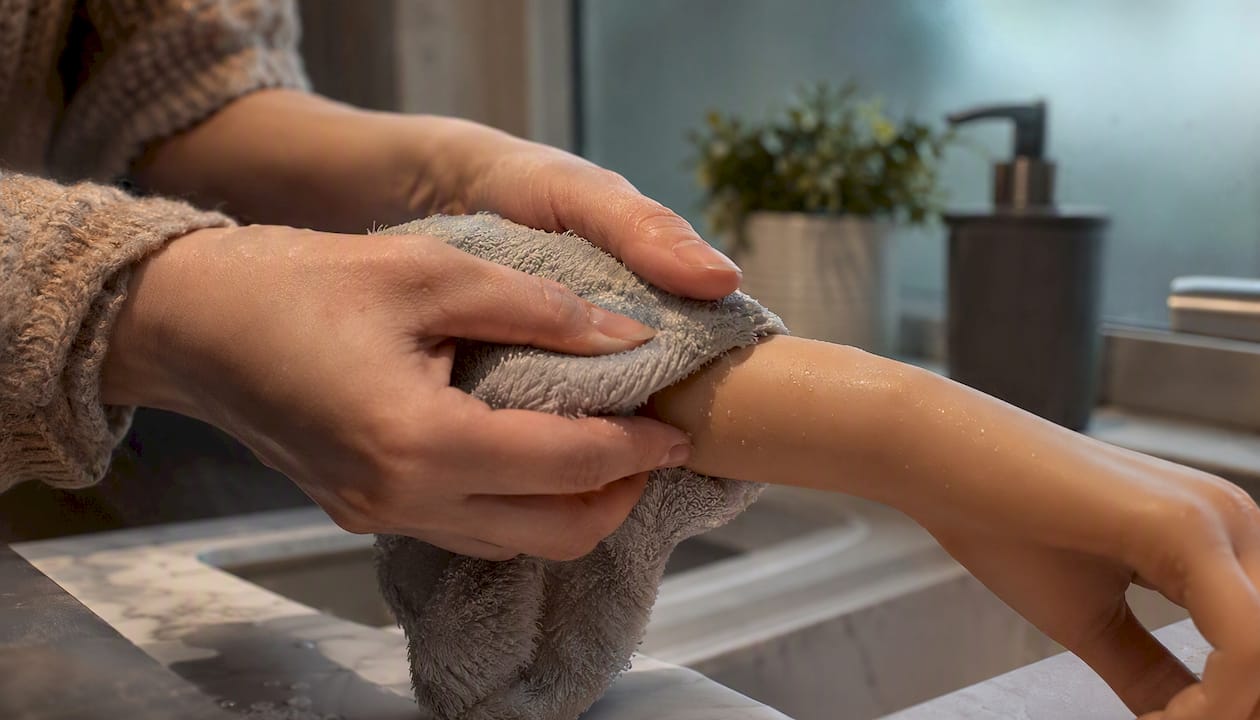
- Pat the exterior dry with a soft, lint-free cloth.
- Use a thin, dry foam stick or microfiber wand to dry internal orifice channels. Do not skip this step.
- Allow the doll to air-dry fully in a ventilated space before storage. At least 30–60 minutes.
Regular scheduled care:
- Weekly or biweekly: Full-body wash with mild soap and warm water. Rinse and dry completely.
- Every 2–4 weeks (TPE only): Apply cornstarch or a dedicated TPE renewal powder to the entire skin surface. This restores texture and prevents tackiness.
- Monthly: Check all joint connections for looseness, unusual resistance, or clicking. Inspect high-friction areas for micro-tears.
- Quarterly: Deep sanitization of all orifices using a mild antimicrobial solution safe for the material. Inspect wig attachment and condition.
Products to use and avoid:
- Use mild, pH-neutral soap or a dedicated toy cleaner
- Use water-based lubricants only (oil-based lubricants degrade TPE)
- Avoid alcohol-based cleaners on TPE — they dry and crack the surface
- Avoid bleach, acetone, or abrasive cloths on any material
Pro Tip: Drying verification matters more than which cleaner you use. Run a dry microfiber wand through each orifice after cleaning, then check it. If it comes out damp, repeat. Moisture left inside is the primary cause of mold and persistent odor — both of which are effectively irreversible.
How should you store a doll to prevent stains and deformation?
Storage is where most owners make avoidable mistakes. The right setup costs almost nothing to maintain and adds years to a doll’s usable life.
Best storage positions and surfaces:
- Lay the doll flat on a soft foam mat or padded surface, never on bare hard flooring
- If hanging, use a dedicated doll hook through the neck attachment point to distribute weight evenly
- Avoid storing in a seated or bent position for more than a few hours
- For long-term storage, a padded storage case or the original packaging box works well
Temperature and humidity:
- Keep storage temperature between 50°F and 85°F. Extreme heat softens and deforms TPE; extreme cold makes both materials brittle
- Avoid direct sunlight, which degrades both TPE and silicone over time
- Low-humidity environments are preferable. High humidity combined with residual moisture creates mold risk
Clothing and material contact rules:
- Remove dark or brightly dyed clothing before storage. Dye transfer into TPE skin is permanent
- Avoid long-term contact with leather, latex, or rubber materials, which can stain or chemically react with the skin surface
- Ozone exposure (near certain air purifiers or electrical equipment) degrades silicone over time
Moving or transporting safely:
- Support the head and torso separately when lifting
- Never drag the doll by a limb
- Wrap in a soft blanket or foam padding for transport
- Keep the doll horizontal in any vehicle to avoid joint stress from an upright position
You can find Youqdoll’s full sex doll storage guidance for model-specific recommendations.
What repairs can you do yourself, and when do you need professional help?
Most surface-level damage is fixable at home. Structural or internal problems are not.
DIY repairs you can safely attempt:
- Small surface tears (under 1 inch) on TPE skin using a TPE patch kit and compatible adhesive
- Loose seam edges along body joins using manufacturer-recommended bonding agents
- Reattaching small external parts (fingernails, ear details) with appropriate flexible adhesive
- Wig repair or replacement
Safe DIY repair sequence:
- Clean and fully dry the damaged area before touching it with any adhesive
- Apply a thin, even layer of TPE-compatible patch adhesive to both surfaces
- Press firmly and hold for the adhesive’s recommended cure time
- Allow 24 hours before use
When to call a professional or retire the doll:
- Skeleton joint failure (a limb that no longer holds position or has internal breakage)
- Extensive tearing across a large surface area that a patch kit cannot bridge cleanly
- Persistent odor after repeated deep cleaning, which typically signals internal mold
- Internal moisture that cannot be fully dried despite extended air-drying
Professional restoration services exist for high-value dolls and can address skeleton repairs and large cosmetic damage. Costs vary widely depending on the repair scope, but structural skeleton work typically runs $100–$300 or more. For lower-cost TPE dolls, replacement is often more practical than professional repair once structural damage occurs.
Signs it’s time to replace your doll
Knowing when to retire a doll is as practical as knowing how to maintain one. Some damage signals a safety concern, not just an aesthetic one.
Observable signs the doll has reached end of life:
- Irreversible skin thinning at high-friction areas, where the material has worn through to near-structural layers
- Orifice staining that persists after multiple deep cleaning attempts
- Persistent odor after thorough cleaning and full drying, indicating internal contamination
- Structural joint failure that makes safe handling or posing impossible
- Surface cracking across large areas, especially on TPE that has dried out beyond restoration
Health and safety triggers:
- Recurrent mold visible behind orifice linings or at internal seams
- Internal moisture that cannot be fully eliminated despite extended drying and sanitization
- Any material breakdown that creates sharp or abrasive interior surfaces
End-of-life options:
- Disassemble and dispose of components according to local solid waste guidelines. TPE and silicone are not recyclable through standard curbside programs in most US municipalities.
- Some owners choose to replace individual components (head, torso) rather than the full doll when only one area has failed.
Is a higher upfront investment in silicone actually worth it?
The math is straightforward when you run it over a realistic ownership period.
A TPE doll priced at $800 that lasts a few years under average care has a certain annual cost. A silicone doll priced at $2,000 that lasts significantly longer under the same care may have a comparable or lower annual cost. The silicone doll typically offers more years of use, lower maintenance complexity, and easier cleaning.
Two things this table does not capture: the time cost of TPE’s more demanding maintenance schedule (powdering, more careful cleaner selection) and the replacement frequency for owners who use their doll heavily. Under daily use, a TPE doll may need replacement in under 2 years, which changes the math significantly.
The honest answer is that silicone wins on total cost of ownership for buyers who plan to maintain their doll well and use it regularly. For occasional use or a first purchase, a quality TPE option is a practical starting point. Choosing the right material for your actual use pattern is covered in depth in this buying guide.
What should you ask a manufacturer before buying?
Warranty language and manufacturer support quality directly affect how long your doll lasts in practice. A doll with documented care instructions and accessible support is a better long-term investment than one without, regardless of material.
Questions to ask before purchasing:
- What is the warranty length, and what specific damage types does it cover?
- Does the warranty require proof of proper maintenance to remain valid?
- Which cleaning products and lubricants does the manufacturer recommend for this specific material?
- What is the recommended maintenance schedule for this model?
- Does the brand offer authorized repair services or refer to vetted repair partners?
- Is there a documented care guide specific to the model or material?
Manufacturers who publish detailed care instructions and maintain active support channels reduce your lifecycle risk. Youqdoll’s step-by-step care guide is one example of the kind of post-purchase support that translates directly into longer doll life.
Pro Tip: Store your warranty documentation and purchase receipt alongside a printed or saved copy of the manufacturer’s care instructions. If you ever need to make a warranty claim or contact support, having the maintenance record ready demonstrates proper care and strengthens your case.
What most new owners get wrong about long-term ownership
The conventional wisdom in this category focuses almost entirely on material quality as the lifespan driver. Buy silicone, the advice goes, and your doll will last. That is partly true, but it misses the more important variable.
Across manufacturer FAQs and ownership protocols, the consistent finding is that owner behavior explains more lifespan variance than the doll’s price. A $2,000 silicone doll stored wet after use will develop internal mold within weeks. A $600 TPE doll dried thoroughly after every session and powdered on schedule can reach its full 5-year ceiling. The material sets the ceiling. Your habits determine whether you reach it.
What new owners consistently underestimate is the drying step. Cleaning gets attention because it is visible. Drying is invisible, which is exactly why it gets skipped. That single habit, done consistently, is worth more than any premium cleaner or storage accessory.
The other underestimated factor is posing. Dolls left in seated or bent positions for days at a time develop compression damage that no repair kit fixes. Neutral storage is not optional maintenance. It is the difference between a doll that looks good at year three and one that does not.
Youqdoll’s silicone and TPE options, built to last
If you are buying with longevity in mind, Youqdoll offers both silicone and TPE dolls with documented care guidance and full customization, so you get the right material for your actual use pattern.

The Scarlett 166cm silicone doll and Tiffany 166cm silicone doll are two of Youqdoll’s premium full-body silicone options, crafted for durability and realistic detail. Both come with access to Youqdoll’s care guide and support resources. For buyers considering a mixed-material build, the Mya 160cm TPE body with silicone head offers the tactile softness of TPE with the stain resistance and detail of a silicone face. Every model ships discreetly to the US. Check the warranty and care documentation on any product page before purchasing, and reach out to Youqdoll’s support team with questions about maintenance schedules or material suitability for your needs.
Sources
These manufacturer and support pages shaped this guide and are worth bookmarking alongside your own care routine. Compare their recommended schedules to the routine above to confirm you are covering every interval.