

Interchangeable Doll Heads Explained for Lifelike Silicone Dolls
An interchangeable doll head is a removable head sculpture designed to be swapped onto a compatible doll body, giving you multiple looks from a single frame. The practice is popular and genuinely practical — but only when the connector type, neck geometry, and pigment batch all align. Youqdoll’s Dottie, for example, pairs a factory-matched silicone head with a TPE body using a standard M16 connector, which is exactly the kind of verified fit that makes head swapping reliable. The Love Doll Network community has documented countless cases where pigment batch variation creates a visible neck-line divide even between heads and bodies from the same brand. Bottom line: interchangeable heads work beautifully when compatibility is confirmed upfront, and fail visibly when it is not.
Table of Contents
- What is an interchangeable doll head and how does the connector work?
- Why silicone and TPE heads often look different on the same body
- The real pros and cons of swapping heads on a lifelike doll
- How to check compatibility before you buy
- How to swap, seal, and care for interchangeable heads safely
- What replacement heads actually cost and how long they take
- Is an interchangeable head right for you, and how Youqdoll handles it
- Key Takeaways
- A realism-first take on head swapping
- Your matched head-and-body options from Youqdoll
- Useful sources
What is an interchangeable doll head and how does the connector work?
The neck-to-head interface is where most swaps succeed or fail. Two connector standards dominate the lifelike silicone doll market.

| Connector Type | How It Works | Key Advantage | Common Risk |
|---|---|---|---|
| M16 Threaded | Head screws directly onto a threaded neck post | Secure, stable hold | Slow to swap; cross-threading risk |
| M16 Quick-Release | Head clicks onto a quick-release plate | Fast swapping | Plate must match brand’s plate spec |
| Proprietary Locator-Pin | Molded pin-and-slot system unique to the manufacturer | Rotation limiting, precise alignment | Blocks all cross-brand swaps |
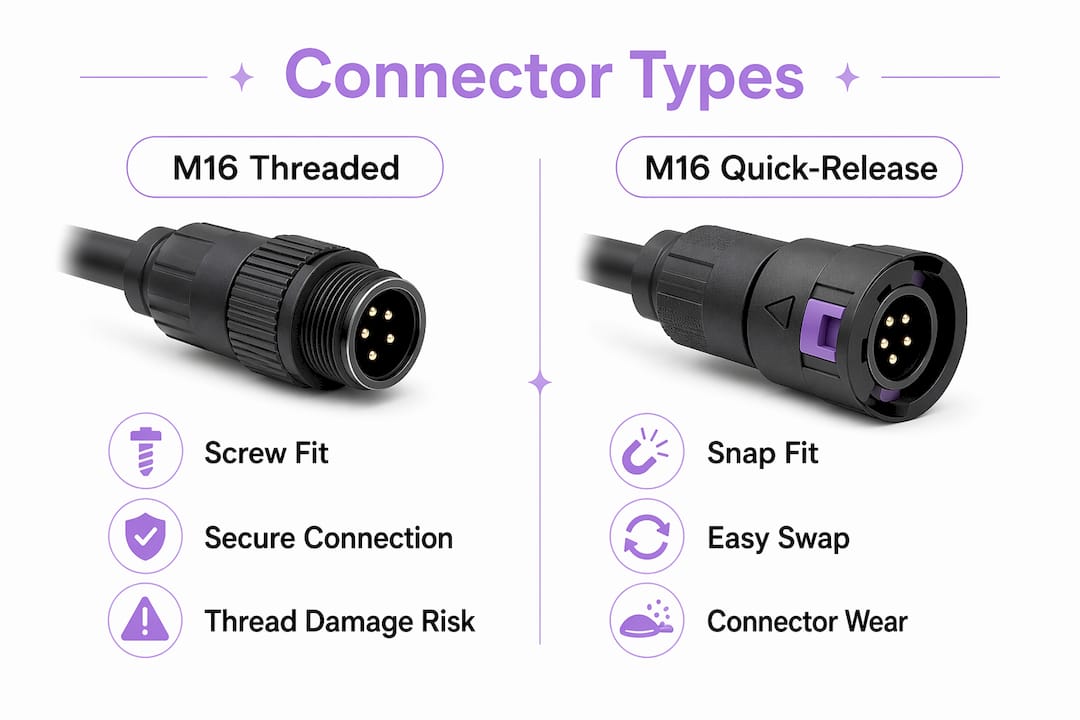
Standard M16 connectors make it generally possible to adapt nearly any M16-based head and body together — but only when no proprietary neck interface exists. That caveat matters more than most buyers expect.
Beyond the connector thread, three physical dimensions determine whether a head actually fits: neck cavity inner diameter, recess depth, and the presence of molded locator pins. Brands like Irokebijin use a locator pin-and-slot system specifically to limit head rotation; Tayu builds molded features that make third-party heads look misaligned even when they physically attach. The BJD world uses terms like headcap, faceplate, and headback to describe removable head systems — vocabulary that carries over to lifelike silicone dolls when discussing how the head shell is constructed and accessed.
Compatibility is not just about thread size. Manufacturers frequently build molded locator pins, rotation limiters, or extra-deep head recesses that prevent cross-brand head swaps even when connector types appear identical on paper.
Pro Tip: Before ordering any replacement head, photograph the inside of the neck cavity from directly above and from the side. Send both images to the vendor and ask them to confirm fit against their head’s recess depth and inner diameter — not just the connector label.
Why silicone and TPE heads often look different on the same body
Material choice shapes everything about how a head looks at the neck line. Silicone offers finer surface pore detail, higher translucency, and a firmer feel that holds paint and pigment more precisely. TPE is softer and more flexible, but its pigment absorbs differently and its surface texture is coarser under close inspection.
- Translucency: Silicone transmits light in a way that mimics real skin; TPE looks flatter and more opaque under direct lighting.
- Pigment stability: Silicone pigment is locked into the material during curing; TPE pigment can shift slightly with heat and compression.
- Surface texture: Silicone holds sculpted pore detail sharply; TPE softens fine detail during production.
- Paintability: Silicone accepts intrinsic and extrinsic paint layers well; TPE requires specific adhesion primers.
The deeper problem is pigment batch variation. Even two heads from the same brand, ordered months apart, can differ visibly at the neck line because the pigment formula or material batch shifted between production runs. Sculpt scale adds another layer: a head sized for a 160cm body may sit too high or too low on a 166cm neck post, changing how the neck recess seals and creating a visible gap or color step.
The aesthetic outcome is often the biggest challenge when piecing components. Even same-brand parts can mismatch due to pigment and material batch differences — a risk that factory-matched head-and-body sets eliminate entirely.
For a deeper look at TPE vs silicone trade-offs, Youqdoll’s buyer’s guide covers the material differences in detail.
The real pros and cons of swapping heads on a lifelike doll
Pros:
- Multiple looks and characters from one body investment
- Lower cost than buying two complete dolls
- Flexibility for roleplay, photography, or collection building
- Ability to upgrade a head without replacing the full body
Cons:
- Proprietary connectors can block cross-brand swaps entirely
- Pigment and texture mismatches are common, even within one brand
- Repeated swapping wears the neck interface and can loosen the fit over time
- Mixing manufacturers often voids the warranty on both pieces
- Return policies rarely cover aesthetic mismatches discovered after assembly
The warranty risk deserves a direct note. Most manufacturers write their return and satisfaction guarantees around the product as sold, not as modified. Swapping a head from a different brand onto a body can void coverage on both items. Always read the return policy before mixing components across manufacturers.
How to check compatibility before you buy
- Confirm the connector spec — ask for the exact label: M16 threaded, M16 quick-release, or proprietary. “Standard connector” is not an answer.
- Request neck cavity measurements — inner diameter in millimeters and recess depth. Compare these to the replacement head’s neck post dimensions.
- Ask for close-up fit photos — a photo of the head seated on the body neck, from the front and side, before purchase.
- Verify material and pigment SKU — ask for the pigment formulation code or batch reference so you can match it to your existing body.
- Check for locator pins or rotation limiters — ask explicitly whether the head or body has any molded alignment features.
- Read the return and warranty terms — confirm whether aesthetic mismatch qualifies for a return before you commit.
Red flags to watch for:
- Vague connector descriptions (“fits most bodies”)
- No fit photos available or seller refuses to provide them
- Inconsistent or missing pigment SKU information
- Seller unable to provide neck cavity measurements
Pro Tip: The rebody community uses the term “rebody” to describe swapping a head onto a different body. Searching vendor forums for your specific body model plus “rebody” often surfaces real user photos of fit results before you spend a dollar.
How to swap, seal, and care for interchangeable heads safely
- Document the original fit — photograph the head seated on the body before removal so you have a reference for alignment.
- Clean both surfaces — wipe the neck post and head cavity with a clean, dry cloth. Remove any dust or residue.
- Warm the head if the manufacturer permits — controlled heat (a microwaveable heating pad for 2–3 minutes) softens vinyl or TPE heads for easier seating. Never use this method on silicone unless the manufacturer explicitly approves it.
- Align the connector carefully — for threaded connectors, start the thread by hand before applying any rotational force. For locator-pin systems, align the pin to the slot before pressing.
- Test rotation and stability — once seated, check that the head moves smoothly through its intended range and does not wobble.
- Apply a neck cover or cosmetic seal if needed — a soft foam collar or vendor-approved neck cover hides any visible gap at the neck line. Use only products the manufacturer recommends; aggressive adhesives or solvents can damage silicone and TPE surfaces.
For cleaning after swaps, follow material-specific guidance: silicone surfaces tolerate mild soap and water; TPE requires gentle, non-oil-based cleaners. Store the doll in a neutral posture with no lateral stress on the neck joint. Frequent swapping gradually loosens the neck interface, so limit swaps to when you genuinely want a different look rather than as a routine.
Only follow the manufacturer’s guidance on heat-based softening methods. Applying heat incorrectly to silicone can cause permanent surface damage that no cleaning or repair will fix.
What replacement heads actually cost and how long they take
Cost drivers for a replacement or custom silicone head include sculpt complexity, realistic hand-painted detail, rooted hair versus a wig cap, custom eye inserts, and whether the pigment is matched to an existing body or formulated fresh.
- Off-the-shelf heads from a brand’s existing catalog: generally the fastest option, often shipping within the brand’s standard production window.
- Made-to-order custom heads: longer lead times due to sculpting, painting, and quality review cycles. Vendors rarely publish exact timelines publicly; ask directly before ordering.
- Adapter parts and neck collars: small additional costs, but necessary when the connector spec requires an intermediary piece.
- Pigment-match samples: some vendors charge a fee for a test sample before committing to a full custom order. Worth it for high-realism builds.
| Cost Factor | Typical Impact | Notes |
|---|---|---|
| Standard catalog head | Lower cost, faster delivery | Pigment match not guaranteed |
| Custom sculpt | Higher cost, longer lead time | Confirm connector spec upfront |
| Rooted hair | Adds cost and production time | More realistic than wig cap |
| Pigment match fee | Small additional charge | Reduces neck-line mismatch risk |
| Return shipping | Buyer’s cost in most policies | Factor in before ordering cross-brand |
Custom silicone head orders require patience. Production, painting, and quality checks all add time — plan ahead rather than ordering under deadline pressure.
Is an interchangeable head right for you, and how Youqdoll handles it
The honest answer depends on one question: how much does a perfect neck-line match matter to you? If realism is your priority, a factory-matched head-and-body set eliminates the pigment, texture, and fitment risks entirely. If you want collection flexibility and are willing to manage compatibility carefully, interchangeable heads are a real option.
Youqdoll builds its lineup around factory-matched solutions that remove the guesswork. Every head and body ships as a verified pair with documented fit and matched pigmentation.
- Dottie (160cm): TPE body with a factory-matched silicone head — the exact mixed-material pairing that benefits most from factory verification.
- Scarlett 166cm: Full silicone construction, matched head and body, no cross-material tone risk.
- Tiffany 166cm: Another full silicone option with customization choices for skin tone and facial features.
- CC Mini 75cm: Compact silicone build with BJD-style proportions, matched head included.
- Mya 160cm: TPE body with silicone head, available in blonde, with Youqdoll’s standard satisfaction guarantee.
Pro Tip: If you want the flexibility of head swapping later, ask Youqdoll at the time of purchase whether a spare matched head is available for your chosen model. Getting a second head from the same production batch is the only reliable way to guarantee a pigment match.
Key Takeaways
Factory-matched head-and-body sets from a single manufacturer are the most reliable path to a seamless, lifelike result — interchangeable heads work, but only when connector type, neck geometry, and pigment batch are all verified before purchase.
| Point | Details |
|---|---|
| Connector type is non-negotiable | Always confirm M16 threaded, M16 quick-release, or proprietary spec — never accept “standard.” |
| Pigment batch drives aesthetics | Even same-brand heads can show a visible neck-line divide due to batch variation; request a pigment SKU. |
| Measure before you order | Get neck cavity inner diameter and recess depth in millimeters; ask for close-up fit photos. |
| Know your return policy | Aesthetic mismatches rarely qualify for returns; read the policy before mixing brands. |
| Youqdoll’s matched options | Models like Dottie, Scarlett 166cm, Tiffany 166cm, CC Mini 75cm, and Mya 160cm ship as factory-verified pairs. |
A realism-first take on head swapping
The interchangeable head concept is genuinely exciting. One body, endless looks — it sounds like the perfect setup. But after seeing how many buyers end up disappointed by a visible color step at the neck, the case for factory-matched pairs becomes hard to argue against.
The mechanical side of head swapping is solvable. You can measure connectors, photograph neck cavities, and ask the right questions. What you cannot fully control is pigment drift between production batches. Two heads ordered six months apart from the same brand can look noticeably different under the same lighting. That gap does not disappear with a neck collar; it just gets hidden.
The buyers who get the most from interchangeable heads are the ones who treat it as a deliberate, researched process rather than an impulse add-on. They confirm every spec, order from the same production run when possible, and accept that some visible seam is the trade-off for collection flexibility. For everyone else, a factory-matched doll from a brand like Youqdoll delivers the realism without the risk.
Your matched head-and-body options from Youqdoll
Youqdoll’s factory-matched lineup gives you the realism of a perfectly paired head and body without the fitment anxiety. Every model ships with a verified connector fit and matched pigmentation.

Models like Scarlett 166cm and Tiffany 166cm are crafted in full silicone for maximum realism. Dottie and Mya pair a silicone head with a TPE body, factory-verified for tone and fit. The CC Mini 75cm brings the same matched quality in a compact BJD-style build. Every order ships discreetly, and Youqdoll’s team is ready to help you choose skin tone, facial features, and hair color before production begins. Browse the full lineup at youqdoll.com and find your perfect match today.
Useful sources
- Love Doll Network — Head/Body Compatibility Thread
- BJD Fandom — Head Anatomy and Attachment
- Margaret Ann — Rebodying Tutorial
- Parabox — Doll Customizing Tutorials
- DollyInsider — Doll Terms Explained
- Youqdoll — TPE vs Silicone Buyer’s Guide
- Youqdoll — How to Clean and Care for Your Sex Doll